Problem
Manual prospecting produces scattered, inconsistent data that is hard to prioritize, reducing sales efficiency.
technical case study
SaaS • Lead generation / Mini CRM
MVP for finding, ingesting, organizing and analyzing leads, with a mini CRM structure and a path for commercial growth.

Search by business type and city or area code: each search returns up to 50 businesses and saves the new ones to the database.

Mini CRM with a three-stage pipeline (not contacted, negotiating, contacted), search by name or phone and filters by city, area code and tags.
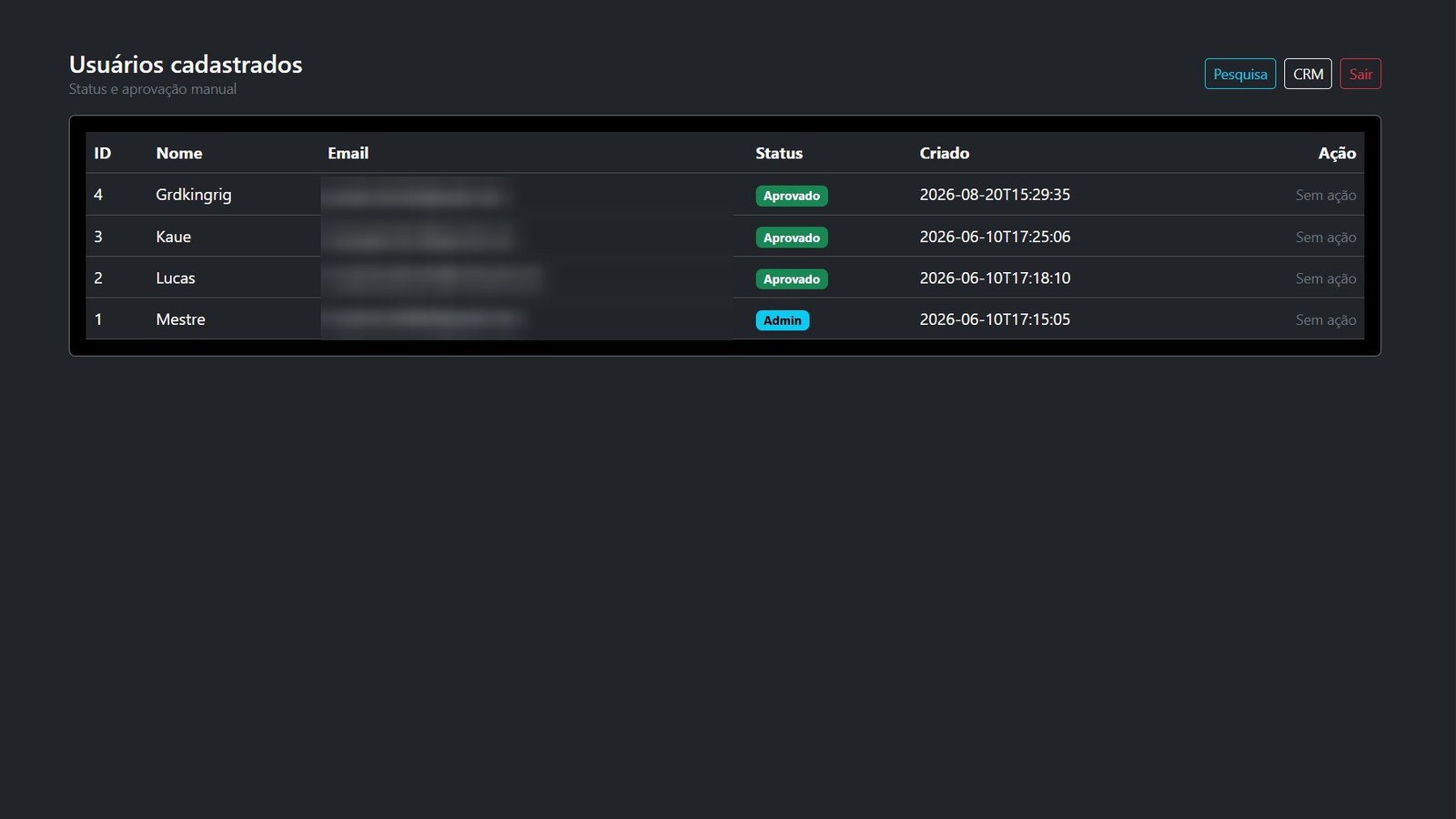
Admin panel with manual approval of new accounts (emails hidden in the image).
Manual prospecting produces scattered, inconsistent data that is hard to prioritize, reducing sales efficiency.
An MVP was built to capture, organize and query leads in a mini CRM structure, ready for filters, classification and a growing sales workflow.
The system created a central place to review opportunities and validate prospecting processes with more clarity and repeatability.
Mature MVP, ready to expand with scoring, automations and commercial integrations.
Leads Karpaz came from the need to organize sales opportunities more objectively. Instead of relying on loose searches and disconnected spreadsheets, the project centralizes data, makes leads easier to read and paves the way for automation and smart prioritization.
Web interface organized into panels, lists and visual states that make leads easy to read, filter and follow up.
Python/FastAPI API that receives, processes and serves lead data in a structured way.
MySQL schema storing leads, commercial attributes, statuses and information useful for analysis and for growing the CRM.
Ingestion, persistence and display are separated to reduce inconsistencies and ease maintenance.
Incoming data is normalized before being used in the sales workflow.
The architecture allows adding authentication, permissions and audit trails in later stages.
Identifying how hard it was to keep leads organized and actionable in a manual process.
Building the base to store and query leads in a more predictable format.
Screens and filters that turn data into a useful commercial view.
Preparing for scoring, automations, integrations and more advanced prospecting routines.
# ---------- APIs protegidas ----------
@app.post("/api/search")
async def api_search(request: Request, payload: dict, _user=Depends(require_user)):
    rate_limit(request, key="search", limit_per_min=15)

    try:
        comercio = (payload.get("comercio") or "").strip()
        local_mode = payload.get("local_mode")  # "ddd" | "city"
        local_value = (payload.get("local_value") or "").strip()

        if not comercio or local_mode not in ("ddd", "city") or not local_value:
            return JSONResponse({"error": "Campos inválidos"}, status_code=400)

        rows, stats = fetch_and_store_new(comercio, local_mode, local_value, max_new=50)
        return {"rows": rows, "stats": stats}

    except Exception as e:
        return JSONResponse({"error": str(e)}, status_code=500)

@app.get("/api/leads")
def api_leads(
    status: int = 1,
    q: str | None = None,
    city: str | None = None,
    ddd: str | None = None,
    tags: str | None = None,
    limit: int = 200,
    offset: int = 0,
    _user=Depends(require_user)
):
    tag_names = [t.strip().lower() for t in (tags or "").split(",") if t.strip()]
    rows = list_leads(
        status=status,
        q=q,
        city=city,
        ddd=ddd,
        tag_names=tag_names,
        limit=limit,
        offset=offset
    )
return {"rows": rows, "count": len(rows)}CREATE TABLE IF NOT EXISTS places (
id BIGINT UNSIGNED NOT NULL AUTO_INCREMENT,
place_id VARCHAR(128) NOT NULL,
name VARCHAR(255) NULL,
phone VARCHAR(64) NULL,
stars DECIMAL(3,2) NULL,
maps_url TEXT NULL,
website TEXT NULL,
city VARCHAR(128) NULL,
ddd VARCHAR(16) NULL,
status TINYINT NOT NULL DEFAULT 1,
created_at TIMESTAMP NOT NULL DEFAULT CURRENT_TIMESTAMP,
updated_at TIMESTAMP NOT NULL DEFAULT CURRENT_TIMESTAMP ON UPDATE CURRENT_TIMESTAMP,
PRIMARY KEY (id),
UNIQUE KEY uq_places_place_id (place_id),
KEY idx_places_status (status),
KEY idx_places_city (city),
KEY idx_places_ddd (ddd),
KEY idx_places_created_at (created_at),
CONSTRAINT chk_places_status CHECK (status IN (1,2,3))
);
CREATE TABLE IF NOT EXISTS tags (
id BIGINT UNSIGNED NOT NULL AUTO_INCREMENT,
name VARCHAR(80) NOT NULL,
PRIMARY KEY (id),
UNIQUE KEY uq_tags_name (name)
);
CREATE TABLE IF NOT EXISTS place_tags (
place_id BIGINT UNSIGNED NOT NULL,
tag_id BIGINT UNSIGNED NOT NULL,
created_at TIMESTAMP NOT NULL DEFAULT CURRENT_TIMESTAMP,
PRIMARY KEY (place_id, tag_id),
KEY idx_place_tags_tag_id (tag_id),
CONSTRAINT fk_place_tags_place
FOREIGN KEY (place_id) REFERENCES places(id) ON DELETE CASCADE,
CONSTRAINT fk_place_tags_tag
FOREIGN KEY (tag_id) REFERENCES tags(id) ON DELETE CASCADE
);function buildQuery() {
const q = $("q").value.trim();
const city = $("city").value.trim();
const ddd = $("ddd").value.trim();
const tags = filterTags.join(",");
const p = new URLSearchParams();
p.set("status", String(currentStatus));
if (q) p.set("q", q);
if (city) p.set("city", city);
if (ddd) p.set("ddd", ddd);
if (tags) p.set("tags", tags);
p.set("limit", "200");
p.set("offset", "0");
return "/api/leads?" + p.toString();
}
async function load(showOkLog=true) {
const url = buildQuery();
setLog("Carregando leads...", "info");
try {
const res = await fetch(url);
const data = await res.json();
if (!res.ok) {
setLog(data.error || "Erro ao listar", "err");
return;
}
lastRows = data.rows || [];
renderTable(lastRows);
if (showOkLog) {
setLog(`OK: ${data.count} leads em "${statusLabel(currentStatus)}".`, "ok");
}
} catch {
setLog("Falha de rede/servidor.", "err");
}
}
// Debounce de busca
let tmr = null;
function debounceLoad() {
clearTimeout(tmr);
tmr = setTimeout(() => load(), 250);
}Leads Karpaz brought sales opportunities into a clearer structure, laying the groundwork for analysis, prioritization and a better prospecting process.
The project reinforced that a useful SaaS starts by solving one specific step of the process well, before trying to cover the whole sales workflow.